Define core database terminology (records, fields, tables, primary keys, relationships) and identify these components within a healthcare database example (CO-7)
Identify the major healthcare database systems (EHR, practice management, pharmacy, lab information) and explain each system's role in clinical operations (CO-7)
Explain how databases support patient care workflows, billing accuracy, and HIPAA regulatory compliance in healthcare organizations (CO-7)
Analyze a healthcare data scenario to determine which database safeguards (access controls, audit trails, encryption) are required to maintain HIPAA compliance (CO-7)
Part 1 of 6
Part 1: What Is a Database and Why Healthcare Depends on Them
Every healthcare organization — from a small family practice to a large hospital system — relies on databases to store, organize, and retrieve critical information. A database is a structured collection of data organized so that it can be easily accessed, managed, and updated. Unlike a simple spreadsheet or a paper filing cabinet, a database is specifically designed to handle large volumes of related data, enforce rules about how that data is stored, and allow multiple users to access the data simultaneously without conflicts.
Think about what happens during a single patient visit to a medical clinic. The front-desk coordinator looks up the patient's demographic information and insurance details. The medical assistant records vital signs and the reason for the visit. The provider reviews the patient's medical history, documents examination findings, orders lab tests, and writes prescriptions. The billing specialist assigns diagnosis and procedure codes and submits a claim to the insurance company. Every one of these actions involves reading from or writing to a database.
Data vs. Information
Before diving deeper, it is important to distinguish between data and information. Data consists of raw facts and figures — a patient's date of birth, a blood pressure reading of 128/82, or an insurance ID number. Data by itself has limited meaning until it is organized and interpreted. Information is data that has been processed, organized, or presented in a context that makes it meaningful.
Why Not Just Use Spreadsheets?
If a spreadsheet like Excel can store data in rows and columns, why do healthcare organizations need dedicated databases? Explore each limitation below:
A busy clinic generates thousands of records per day. Spreadsheets slow down dramatically with large datasets, while databases are engineered to handle millions of records efficiently.
In a healthcare office, dozens of staff members need to read and update patient data simultaneously. Databases manage concurrent access with locking mechanisms and transaction controls; spreadsheets do not handle it well and can cause data conflicts or corruption.
Databases enforce rules (called constraints) that prevent invalid data from being entered, such as requiring a valid date format or preventing duplicate patient IDs. Spreadsheets allow virtually any data in any cell, making it easy to introduce errors.
Databases provide granular access controls, allowing different staff members to see different data. A medical assistant might access vital signs but not billing information. Spreadsheets offer limited security features and are easily copied or shared without controls.
Healthcare data is inherently connected: a patient has multiple visits, each visit has multiple procedures, each procedure has a billing code. Databases model these relationships explicitly through foreign keys and join operations; spreadsheets store flat, disconnected tables.
☰
Scale
Handle millions of records without performance degradation.
👥
Multi-User Access
Dozens of staff access data simultaneously without conflicts.
✓
Data Integrity
Constraints prevent invalid data and enforce consistency rules.
Link patients to visits, procedures, prescriptions, and billing codes.
Healthcare Connection
Healthcare Connection: When a nurse enters a patient's allergy to penicillin into the EHR database, that information is instantly available to every provider, pharmacist, and emergency department clinician who accesses the patient's record. If the same allergy were recorded on a paper chart or a personal spreadsheet, it might never reach the ER physician who needs it during a midnight emergency.
Part 2 of 6
Part 2: Database Terminology: The Building Blocks
To work effectively with healthcare information systems, you need to understand the fundamental vocabulary of databases. These terms will appear throughout your career whenever you interact with EHR systems, billing software, practice management applications, or any other data-driven healthcare tool. Explore each term below:
A table is the primary structure in a database. It organizes data about a specific subject or entity into a grid of rows and columns, similar in appearance to a spreadsheet. A healthcare database might contain separate tables for Patients, Appointments, Providers, Insurance Plans, Diagnoses, Medications, and Lab Results.
A record (also called a row) represents a single instance of the entity described by the table. In a Patients table, each record represents one individual patient. Every record in a table has the same structure — the same set of fields — but different data values.
A field (also called a column or attribute) represents a single piece of information collected about each record. In the Patients table, typical fields include Patient ID, First Name, Last Name, Date of Birth, Phone Number, Insurance ID, and Primary Physician. Each field has a defined data type (text, number, date, yes/no).
A primary key is a field (or combination of fields) that uniquely identifies each record in a table. No two records can have the same primary key value, and the primary key cannot be blank. Common healthcare primary keys include:
Medical Record Number (MRN) – unique to each patient
Appointment ID – system-generated for each appointment
National Provider Identifier (NPI) – 10-digit provider ID
A foreign key is a field in one table that references the primary key of another table. Foreign keys create relationships between tables, linking related data across the database. For example, the Appointments table might include a Patient_ID foreign key that links each appointment to the corresponding patient in the Patients table.
Relationships define how tables are connected. There are three main types:
One-to-many – One patient can have many appointments (most common).
One-to-one – Each patient has one insurance eligibility record.
Many-to-many – Patients can have many diagnoses, and each diagnosis can apply to many patients (requires a junction table).
A Database Management System (DBMS) is the software that creates, maintains, and provides access to the database. It handles data storage, retrieval, security, backup, and multi-user access. Common platforms include Microsoft SQL Server, Oracle Database, MySQL, and PostgreSQL. When you interact with an EHR, you are using an application built on top of a DBMS.
Healthcare Connection
Healthcare Connection: When a medical assistant searches for a patient by typing a name into the EHR, the system queries the Patients table. When the assistant opens that patient's record and sees upcoming appointments, the system is using the foreign key relationship between the Patients table and the Appointments table to retrieve only the appointments belonging to that specific patient.
Term
Definition
Healthcare Example
Table
A structured collection of related data organized in rows and columns
A Patients table containing demographic and contact information
Record (Row)
A single entry in a table representing one instance of the entity
One row representing patient Maria Rodriguez, MRN 10045678
Field (Column)
A single piece of data collected for each record
The Date_of_Birth field in the Patients table (data type: Date)
Primary Key
A unique identifier for each record; no duplicates or blanks allowed
Medical Record Number (MRN) uniquely identifies each patient
Foreign Key
A field in one table that references the primary key of another table
Patient_ID in Appointments table links each appointment to a patient
Relationship
A defined connection between two tables based on key fields
One-to-many: one patient has many appointments and prescriptions
DBMS
Software that creates, maintains, and controls access to the database
Microsoft SQL Server hosting the EHR database for a hospital
Data Type
The category of data a field can hold (text, number, date, yes/no)
Phone_Number field accepts text (to preserve leading zeros)
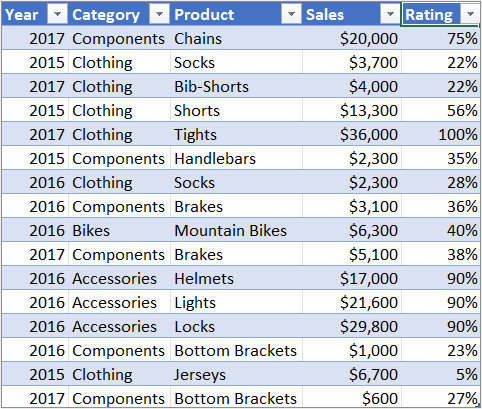
Raw data in a flat table format — similar to how a database stores records in rows with fields in columns — Microsoft Support
Part 3: Healthcare Database Systems: Types and Functions
Healthcare organizations use multiple specialized database systems, each designed to support a specific area of clinical or administrative operations. Understanding these systems helps healthcare professionals appreciate how data flows through the organization and why accurate data entry in one system affects the accuracy and safety of information in others.
An EHR is a comprehensive database system that stores demographics, medical history, medications, clinical notes, lab and imaging results, immunization records, and vital signs. The EHR ties all information together through relationships — a single patient record connects to hundreds of related records across dozens of tables. Major systems include Epic, Cerner (Oracle Health), Athenahealth, and MEDITECH.
Practice management systems handle the administrative and financial side: patient scheduling, registration, insurance verification, billing and claims, charge capture, payment posting, and financial reporting. Many modern systems integrate EHR and PMS into a single platform. Products include Kareo, AdvancedMD, and NextGen.
Pharmacy information systems manage prescription orders, drug inventory, dispensing records, drug interaction checking, and controlled substance tracking. They connect to the EHR through e-prescribing and maintain formulary databases and dosing guidelines. Products include ScriptPro, QS/1, and Omnicell.
Laboratory information systems manage specimen collection, test orders, result reporting, and quality control data. When a provider orders a blood test through the EHR, the order is transmitted to the LIS. After processing, results post back to the EHR. Products include Sunquest, Orchard Software, and Cerner PathNet.
RIS manages imaging orders, scheduling, and report generation. PACS stores and displays medical images (X-rays, CT scans, MRIs) digitally. Together, they allow providers to order imaging, have the radiologist interpret images, and view both images and reports directly in the EHR. Products include Sectra, Agfa HealthCare, and Fujifilm Synapse.
📋
EHR
Clinical documentation, patient history, medications, labs, and imaging.
📅
PMS
Scheduling, registration, billing, claims, and financial reports.
💊
Pharmacy IS
Prescriptions, drug inventory, interactions, and controlled substances.
⚒
LIS
Specimen tracking, test orders, results, and quality control.
📸
RIS / PACS
Imaging orders, digital images, radiology reports, and scheduling.
Healthcare Connection
When a provider orders a CBC for a patient in the EHR, the order travels electronically to the Laboratory Information System. After the phlebotomist draws the blood and the lab runs the test, the results flow back from the LIS to the EHR. The provider can view results in the patient's chart minutes after the test completes — no phone calls, faxes, or paper reports required.
System
Primary Function
Key Data Managed
Example Products
EHR
Clinical documentation and care coordination
Demographics, medical history, medications, lab results, clinical notes
Epic, Cerner, Athenahealth, MEDITECH
PMS
Administrative operations and financial management
Explore 5 healthcare database systems, then trace data flows through patient visit scenarios
Phase 1: Exploration 0/5 systems explored
📋
EHR
Electronic Health Records
📅
PMS
Practice Management
💊
Pharmacy IS
Pharmacy Information
⚒
LIS
Laboratory Information
📸
RIS / PACS
Radiology & Imaging
All 5 Systems Explored!
You have explored every healthcare database system. Ready to test your understanding of how data flows between them?
Data Flow Challenge
Trace the correct data flow for each patient visit scenario
0/4
Data Flows Traced Correctly
Part 4 of 6
Part 4: Health Information Exchange (HIE) and Data Interoperability
Individual healthcare database systems are powerful, but their value multiplies dramatically when they can share data with each other. Health Information Exchange (HIE) is the electronic sharing of health-related information among different organizations according to nationally recognized standards.
Three Forms of HIE
HealthIT.gov identifies three primary forms of health information exchange. Explore each below:
Directed Exchange is the ability to send and receive secure health information electronically between known, trusted providers. This is similar to secure email and is commonly used for referrals, discharge summaries, and lab results.
Example: A primary care physician sends a referral summary directly to a cardiologist's EHR. Both parties are known and trusted — the exchange is point-to-point and planned.
Query-Based Exchange is the ability for providers to search for and retrieve patient information from other organizations, typically during unplanned care situations.
Example: An emergency room physician queries the HIE network to pull up a patient's medication list and allergy information from their primary care provider's EHR, even if the two organizations use different systems.
Consumer-Mediated Exchange allows patients themselves to aggregate and control the sharing of their health information among providers.
Example: A patient uses a patient portal or mobile health app to download their records from one provider and share them with a new specialist. The patient controls what is shared and with whom.
Why Interoperability Matters
Interoperability is the ability of different information systems to access, exchange, integrate, and use data in a coordinated manner. Without interoperability, critical patient information remains trapped in isolated databases — a problem known as data silos. The consequences are serious:
Duplicate testing – Providers may order tests that have already been performed.
Medication errors – Dangerous drug interactions can go undetected without a complete medication list.
Delayed care – Waiting for faxed records slows treatment decisions.
Patient frustration – Patients repeat their history at every new provider.
The 21st Century Cures Act prohibits information blocking — practices that prevent the sharing of electronic health information.
Healthcare Connection
Healthcare Connection: A patient with diabetes sees an endocrinologist in one health system and a cardiologist in another. Through a regional HIE network, both specialists can view the patient's complete medication list and clinical notes. This shared access prevents the cardiologist from prescribing a medication that interacts with the endocrinologist's treatment plan.
Part 5: Data Privacy, Security, and HIPAA Compliance
Healthcare databases contain some of the most sensitive personal information in existence. Protecting this data is not just good practice — it is federal law.
HIPAA: The Foundation of Healthcare Data Protection
The Health Insurance Portability and Accountability Act (HIPAA) of 1996 established national standards for protecting patient health information. HIPAA includes two key rules that directly affect how healthcare databases are managed:
The HIPAA Privacy Rule establishes national standards to protect Protected Health Information (PHI). PHI includes patient names, addresses, dates of birth, Social Security numbers, medical record numbers, diagnoses, treatment records, lab results, biometric identifiers, and photographs. The Privacy Rule requires that PHI be used only for treatment, payment, and healthcare operations (TPO) or with patient authorization. Minimum necessary standards apply — staff should access only the minimum amount of PHI needed for their job.
The HIPAA Security Rule specifically addresses electronic Protected Health Information (ePHI). It requires three categories of safeguards: administrative (policies, training, risk assessments), physical (facility access controls, workstation security), and technical (access controls, encryption, audit logs, automatic logoff).
Healthcare database administrators implement multiple layers of security:
Role-based access control (RBAC) – Users get access only to the tables and fields necessary for their job function.
Audit trails – The DBMS logs every access: who, when, what records, what actions.
Encryption – Data encrypted at rest (on disk) and in transit (over networks).
Backup and recovery – Regular automated backups protect against data loss from hardware failures, ransomware, or disasters.
HIPAA Security Safeguards
Administrative safeguards include policies and procedures, workforce training, risk assessments, and security management processes. Every employee who accesses healthcare databases must receive HIPAA training. Organizations must designate a security officer and conduct regular risk analyses to identify vulnerabilities.
Physical safeguards include physical access controls for facilities and workstations. Server rooms must be locked, workstations must be positioned to prevent unauthorized viewing, and devices must be secured against theft. Visitor logs, security cameras, and badge access systems are common physical safeguard measures.
Technical safeguards include access controls (unique user IDs and passwords), encryption of data in transit and at rest, audit controls that log who accessed what data and when, and automatic logoff after periods of inactivity. Multi-factor authentication adds an extra layer of security for remote access to healthcare systems.
Did You Know?
Did You Know? HIPAA violations carry fines ranging from $100 to $50,000 per violation, with annual maximums up to $1.5 million per violation category. Criminal penalties for knowing violations can include fines up to $250,000 and imprisonment.
Healthcare Connection
Healthcare Connection: A medical receptionist accidentally leaves a patient scheduling spreadsheet open on a shared computer in the break room. Another employee photographs the screen and shares the image on social media. This constitutes a HIPAA violation because the organization failed to implement adequate physical safeguards (screen positioning, automatic logoff) and the employee failed to follow minimum necessary standards.
Part 6 of 6
Part 6: Data Integrity and Quality in Healthcare Databases
Even the most secure, well-designed database is only as valuable as the quality of data it contains. In healthcare, data quality is a patient safety issue.
Types of Data Integrity
Database systems enforce data integrity through several mechanisms:
Ensures that every record has a unique primary key and that no primary key value is null. In healthcare, this means every patient has a unique MRN, every appointment has a unique ID, and no record exists without proper identification.
Ensures that foreign key values always reference existing primary key values. An appointment record cannot reference a Patient_ID that does not exist in the Patients table. This prevents orphaned records and broken data relationships.
Ensures that data values fall within acceptable ranges and formats. A Date_of_Birth field must contain a valid date, a blood pressure reading must be within a physiologically possible range, and a State field must contain a valid two-letter abbreviation.
Business rules specific to the organization. For example, a rule that prevents scheduling two patients in the same exam room at the same time, or a rule that requires a provider signature before a lab order can be transmitted.
Common Data Quality Problems in Healthcare
👥
Duplicate Records
Same patient entered multiple times with name variations (Robert Smith vs. Bob Smith). Dangerous if allergies or diagnoses are split across records.
⚠
Incomplete Data
Missing allergy info, emergency contacts, or insurance details delay care and can trigger billing denials.
🕑
Outdated Data
Old addresses, discontinued medications still listed as active, expired insurance coverage that causes claim denials.
✎
Transcription Errors
Transposed digits in phone numbers, wrong diagnosis code selected from dropdown — small errors with large downstream consequences.
Your Role in Data Quality
As a healthcare professional, you are a data steward every time you enter, update, or verify information. Good practices include:
Verify patient identity at every encounter using at least two identifiers (name and date of birth).
Confirm and update demographic and insurance information at each visit.
Enter data completely – do not skip optional fields if the information is available.
Double-check entries before saving, especially numeric values like dates and medication dosages.
Report suspected duplicates to the Health Information Management (HIM) department.
Healthcare Connection
Healthcare Connection: A patient named "Ana Garcia" is registered as "Anna Garcia" during one visit and "Ana M. Garcia" during another, creating two separate records. Her allergy to sulfa drugs is documented only in the first record. During a subsequent visit linked to the second record, a provider prescribes a sulfa-based antibiotic because the allergy information is not visible. This near-miss illustrates why preventing duplicate records is a critical patient safety issue.
Key Takeaway
Key Takeaway: Data integrity is everyone's responsibility. Whether you are entering patient demographics at the front desk, documenting vitals as a medical assistant, or coding diagnoses for billing, the accuracy and completeness of your data entries directly impacts patient safety and care quality.
Knowledge Check
In a hospital's patient database, the Medical Record Number (MRN) serves as the primary key in the Patients table. Which statement BEST describes the function of a primary key?
Correct! A primary key uniquely identifies each record (row) in a database table. No two records can have the same primary key value, and the value cannot be blank. Primary keys do not handle encryption, insurance linking, or access permissions.
Not quite. The correct answer is: It uniquely identifies each record in the table, ensuring no two patients share the same identifier. Primary keys ensure each record has a unique, non-blank identifier.
Knowledge Check
A patient arrives at an emergency room after a car accident. The ER physician needs to quickly access the patient's medication list and allergy information from the patient's primary care provider, who uses a different EHR system. Which form of Health Information Exchange (HIE) enables this scenario?
Correct! Query-Based Exchange allows providers to search for and retrieve patient information from other organizations' systems, typically during unplanned care situations like emergency room visits.
Not quite. The correct answer is: Query-Based Exchange. This form of HIE allows providers to search for and retrieve patient information during unplanned care situations.
Knowledge Check
A healthcare organization's database administrator configures the EHR system so that front-desk staff can view patient demographics and insurance information but CANNOT access clinical notes or lab results. Which HIPAA-related concept does this configuration implement?
Correct! This configuration implements role-based access control (RBAC) combined with the HIPAA minimum necessary standard. RBAC assigns permissions based on job function, ensuring each user accesses only what they need.
Not quite. The correct answer is: Role-based access control with minimum necessary standards. RBAC assigns permissions based on job function to limit data access to what is needed.
Lesson 5.2 Summary
A database is a structured collection of data designed for large-scale, multi-user access with integrity rules — far more powerful than spreadsheets for healthcare operations.
Core database terminology (tables, records, fields, primary keys, foreign keys, relationships, DBMS) forms the vocabulary for understanding any healthcare information system.
Healthcare organizations rely on specialized database systems: EHR for clinical data, PMS for scheduling and billing, Pharmacy IS for medications, LIS for lab tests, and RIS/PACS for imaging.
Health Information Exchange (HIE) enables data sharing across organizations through directed, query-based, and consumer-mediated exchange, reducing data silos and improving patient safety.
HIPAA Privacy and Security Rules require administrative, physical, and technical safeguards to protect electronic Protected Health Information (ePHI) in healthcare databases.
Data integrity (entity, referential, domain, and user-defined) ensures accuracy and reliability — every healthcare professional is a data steward responsible for data quality.